
Soapbox Readers,
With more than 35 years in the health and fitness industry, Casey Conrad has seen every major shift in how clubs attract, serve and retain members. Author of Selling Fitness and several other industry staples, she has trained thousands of professionals worldwide and helped operators adapt to evolving market demands. Today, Casey is focused on one of the most important transitions in our field: the integration of recovery and wellness into the fitness model.
In this article, Casey spotlights longtime client and friend Tasso Kiriakes, whose journey from running traditional 11,600 sq ft club to launching a 2,500 sq ft boutique with a dedicated wellness center illustrates both the challenges and opportunities of his shift. His story serves as a blueprint for operators, large and small. Who want to understand not only why wellness matters, but how to implement it profitably.
“The need is great and so are the opportunities to make a difference.” – Paul Newman
– John & Shannel
From Fitness to Wellness: How One Long-Time Club Operator Made the Journey
By Casey Conrad
For years we’ve told members that “fitness is the foundation.” True—but the most forward-thinking clubs are proving that recovery and wellness are the glue that keeps people consistent, resilient, and coming back. Few stories capture that shift better than my friend and longtime client, Tasso Kiriakes. After decades running an 11,600 sq ft traditional club, he began layering wellness into his offerings. In 2021, he closed that location, sold the building, and relaunched in the next town as a 2,500 sq ft boutique that still delivers one-on-one, high-intensity training—now with about 400 sq ft devoted to wellness technologies and evidence-informed recovery. The result? A business that serves broader needs, attracts new demographics, and drives higher revenue per square foot with lower labor intensity.
This month, we unpack how Tasso made the transition. As noted last issue, major chains and franchises are moving into wellness and recovery with red light, compression, cryo, and saunas. Here’s how an independent operator executed the pivot—profitably.
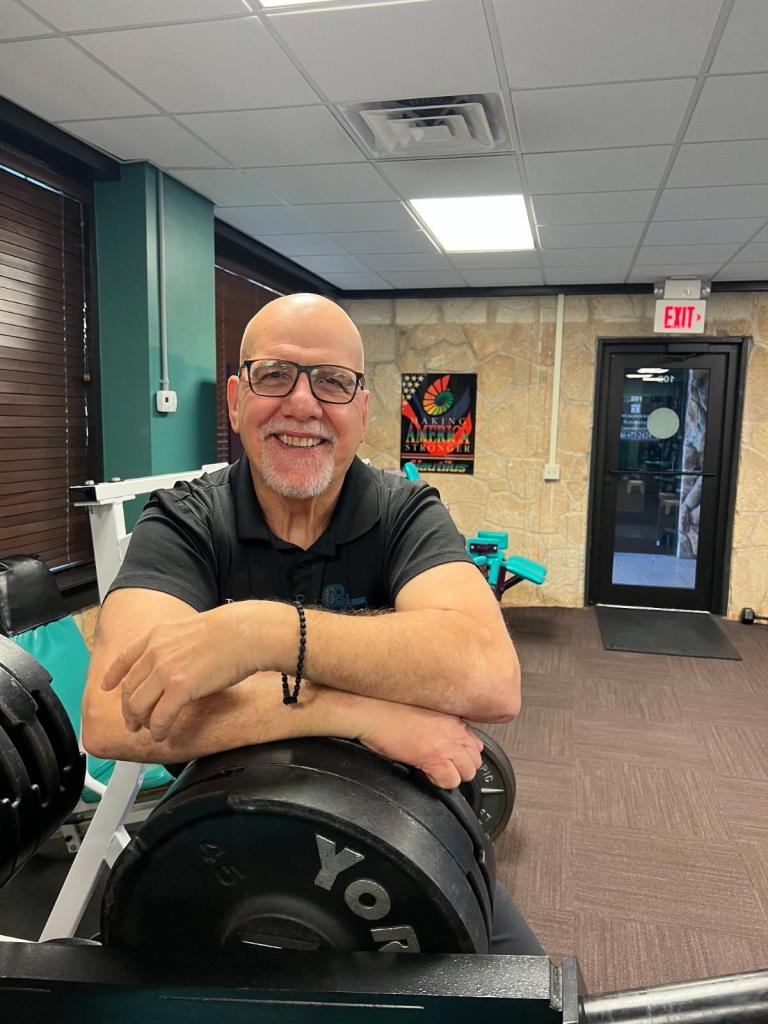
Tasso Kiriakes
Kiriakes’ Background
Tasso has been “into fitness” his entire life. A collegiate wrestling champion who majored in bio-organic chemistry, he combined performance passion with a strong grasp of science. He and his older brother, Steve, entered the business in 1979 with a racquetball club that had a small fitness area, where Tasso trained players for optimal performance. By 1984 he was essentially personal training before it had a name. In 1986 he rented one of the racquetball courts and officially launched Bodez.
In 1995 he bought a former restaurant in Ormond Beach, FL, and converted it into a full facility: large lobby/front desk, free weights, aerobics, Nautilus selectorized equipment, childcare, and private MedX for one-on-ones. Bodez always offered selectorized training support—having a Training Specialist available during peak times to help members set weights and seats. That hands-on touch, combined with Tasso’s strength-training passion, helped build a thriving PT department.
His first entrée into wellness came in 2000 as one of the earliest licensees of my Healthy Inspirations Weight Loss Program—a separate, women-focused center with a dedicated entrance, hydraulic equipment, mandatory exercise, one-on-one coaching three times weekly, and weekly stress-relief sessions in a high-tech massage chair. Optional beauty services (Synergie cellulite treatments and microdermabrasion facials) plus nutrition products rounded out the model. It was ahead of its time—and Kiriakes was often the highest-grossing licensee.
“We embraced the niche and ran it as a separate entity,” says Tasso. “Clients lost inches and we knocked it out of the park financially. People were willing to pay far more to lose weight than to join the general gym. That was an eye-opener.”
The 2008 financial crisis, paired with nearby low-cost clubs, squeezed margins. Tasso realized his unique value—and best margins—came from one-on-one training, not the general gym, which brought more headaches and less joy.
In 2015, while I was consulting on “what’s next,” we piloted biofeedback—popular in Europe, rare in the U.S., Tasso was game. The system identified which body systems were out of balance, and we programmed lifestyle/supplement suggestions via Young Living products. We added ionic detox footbaths, a relaxation massage chair, BEMER, and infrared sauna. For most people, toxins and stress were major culprits. When we helped them feed their cells with better inputs, support elimination, and manage stress, they felt better. “Happy members stay longer and refer more,” notes Kiriakes.
The Transition
Once Tasso committed to a new model, he listed the building. The sale timeline gave him room to find the right site and design the experience. He closed December 1 and reopened January 6—perfectly straddling the holidays.
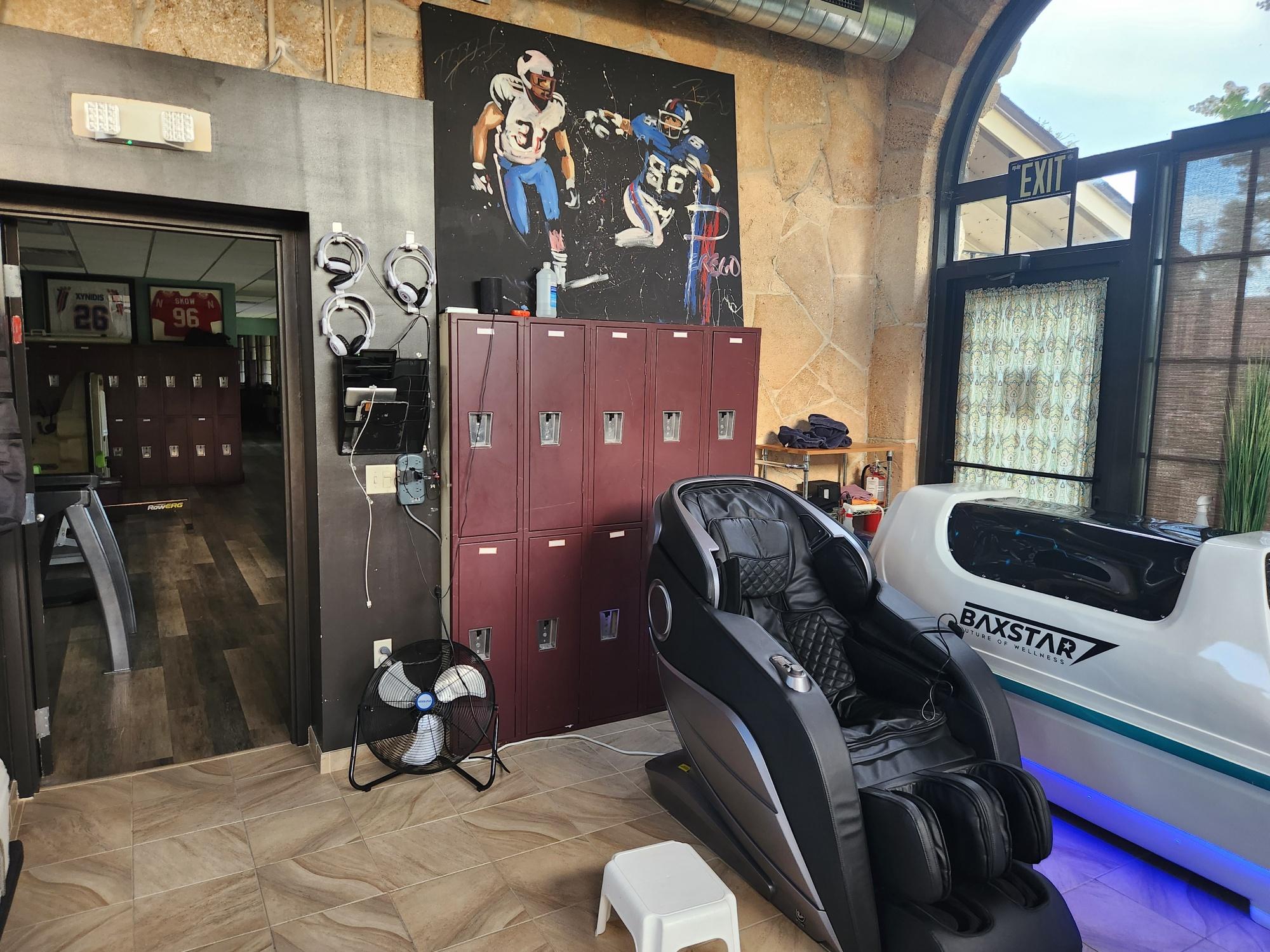
The new space is a long rectangle with a small mid-entry. One-on-one selectorized equipment sits to the left; cardio and assorted pieces to the right. Off that area is a separate, domed room branded the WE Center (Wellness Energy Center).
Initially, the WE Center housed the same modalities from the big club, spread out across the room. Four years later, the mix has expanded and tightened. Today, Bodez offers an impressive blend of traditional and non-traditional therapies, including:
• Biofeedback
• BEMER
• Massage chair
• Ionic footbath
• Aroma Dome
• Normatec compression
• Molecular hydrogen
• Hyperbaric chamber
• HydroMassage bed
• Cryo couch
• Anti-aging beds
• Localized PEMF therapy
• BrainTap & Neural Check
• Celestial Chamber
• Sleep-sound device


Frequently Asked Questions
Why switch to a greater focus on wellness?
Tasso: “It wasn’t an overnight flip—it was gradual. But to answer the question, it was really two-fold. First, for the population who really need our services, in order to return to health and vitality, exercise alone is not enough. In fact, in some cases exercise alone may cause greater effects of stress, both physically and emotionally. So, to really serve this population, we had to deliver a solution that encompassed relaxation, recovery, enhance restorative sleep, and detoxing mentally, physically and spiritually. Second, we had a reputation for working people out really hard, and that turned some folks off. Now you still get the work, then you get amazing feel-good modalities afterward. Clients look forward to coming, and because some of the modalities are unique, they tell more people.”
How many clients do you have now?
Tasso: “When we moved from the big club (and to a neighboring town), only 55 clients came with us. Today we’re at 120. Our minimum is $189/month for once-weekly training, but most come twice weekly because that upgrade includes free access to our Core modalities.”
Do you offer wellness to non-training clients?
Tasso: “Yes. We sell à la carte, but most buy packages. For example, 10 non-training clients at $499/month each generate $5,000/month for the WE Center—unlimited Core modalities plus up to 8 premium sessions monthly.”
What’s your ROI on wellness modalities?
Tasso: “About nine months, which funded the next round of additions with cash flow. People pay more for wellness than workouts—and wellness feels good immediately. From a business perspective, profits are better than in all my years in fitness, and we’re only open four days a week.”
What staffing does the WE Center require?
Tasso: “During peaks, one person assists clients. That same team member handles scheduling/admin in off-peaks, and trainers bring clients into the Center post-workout.”
If someone had a limited budget, what would you start with?
Tasso: “An anti-aging bed paired with BEMER and BrainTap—a 30-minute session. Each is effective alone, but together you get tactile sensation, deep relaxation, and strong physiological support. Next adds: molecular hydrogen, compression boots, Hyperice.”
If you did it again, what would you change?
Tasso: “750 sq ft for wellness. We’ve already borrowed space from cardio and are working with the landlord to blow out a wall. With 750 sq ft, I’d add a red-light bed/booth and a MedBed, plus a dedicated private room for coaching and assessments.”
How do you market the business?
Tasso: “We’ve spent zero on ads. We rebranded to Bodez: Personalized Human Betterment and consistently preach our promise: ‘Reversing chronic disease and re-energizing your life.’ Like it or not, most people don’t care how much they can press. They want to feel better and live more vibrantly. Wellness helps them do that.”
I asked Tasso, “What is your underlying philosophy with your center,” and he articulated in a way that really confirms the power in shifting from fitness alone to incorporating wellness and recovery. “The Wellness solution we offer our members is a system that balances cellular health, refreshens the mindset, restores spiritual health and energy, and balances the interactions of the brain, gut and immune system. When these things happen, the body returns to vibrant health and greater energy. With better outcomes, we secure our position at the top of the market. We are science based, system driven, and worth the higher investment we charge.”
Conclusion: Smaller Footprint, Bigger Future
Tasso’s story shows what many operators are discovering: when you pair purposeful training with recovery and wellness, you widen your addressable market, deepen member loyalty, and unlock higher revenue per square foot—with leaner staffing. The winning playbook isn’t complicated: start with 2–3 high-impact modalities that create an obvious “wow,” package them intelligently (Core + Premium), build simple SOPs, and measure capacity and payback like a hawk. Whether you’re downsizing your footprint or carving out 300–700 sq ft in an existing club, the right wellness mix can transform your brand from “place to work out” into “place to feel better and live better.” That’s where the market is going—and where the margins already are.

Casey Conrad is a 35-year veteran consultant in the health & fitness industry. She has published 10 books, including the widely adopted Selling Fitness: The Complete Guide to Selling Health Club Memberships, which has sold more than 30,000 copies and is translated into multiple languages. Her most recent book, Make Yourself Healthy Again, is consumer-focused, teaching the principles of natural healing and recovery with energetic modalities. Her books can be found on Amazon. Casey can be reached at Casey@CaseyConrad.com or by phone at 401-932-9407.
Why Listening Is the Key to Influence: Insights from Bill McBride
In this video, Bill McBride, the CEO of Active Wellness, discusses the power of influence in both professional and personal relationships. He emphasizes that influence is grounded in building rapport, which stems from authenticity, trust and genuine care. Click the button below to watch the video on the Club Solutions website.

If you would like more detail on any of these seven areas or the actual tools to implement this Performance Management Process, feel free to contact me directly. BillMcBride@BMC3.com.

Innovative Solutions for Fitness and Recreation Organizations

Hello there!
Years ago, I had the opportunity to present at the FitLife Summer Conference, a fantastic event for owners and operators in the Pacific Northwest. When I arrived at the hotel, my room was not yet ready, so I stopped by the front desk to check in and then headed over to the event. At the same time, a good friend and colleague of mine, who had just finished speaking, was waiting to pick up his bag so he could catch his flight.
The problem? There was a long line, only one person working, and three empty stations.
The woman at the desk was terrific. She had great energy, a big smile, and did her best to keep everyone calm. At one point, she looked up, apologized for the wait, and explained that the rest of the team was in a meeting. It was a nice gesture.
But my friend leaned over and said, “That’s great, but our needs still aren’t being met. I’m glad their meeting is more important than their customers.” He had a point.
There are a few lessons here. First, proactive communication helps. It showed she cared. However, secondly, no matter how friendly or empathetic we are, the service must match the customer’s needs. Smiles cannot replace action. And third, that meeting should have paused, staff should have served the customers in front of them, and then returned to the meeting.
Excellent service balances empathy with execution. Do both, and you turn frustration into loyalty.
And here’s some exciting news. Marisa will be presenting at this year’s FitLife Summer Conference. Join her for The Intentional Leader: Leading On Purpose on Wednesday, October 22nd, from 10:20 AM to 11:20 AM (PST) at the Washington Athletic Club in Seattle, Washington. If you have any questions about the event, please don’t hesitate to email us.

Newsletter edited and produced by Megan Shellman-Rickard, Simple Synergy Consulting. Discover what our company can do for your organization: https://www.simplesynergyconsulting.com/
 John Mickelson's Soap Box